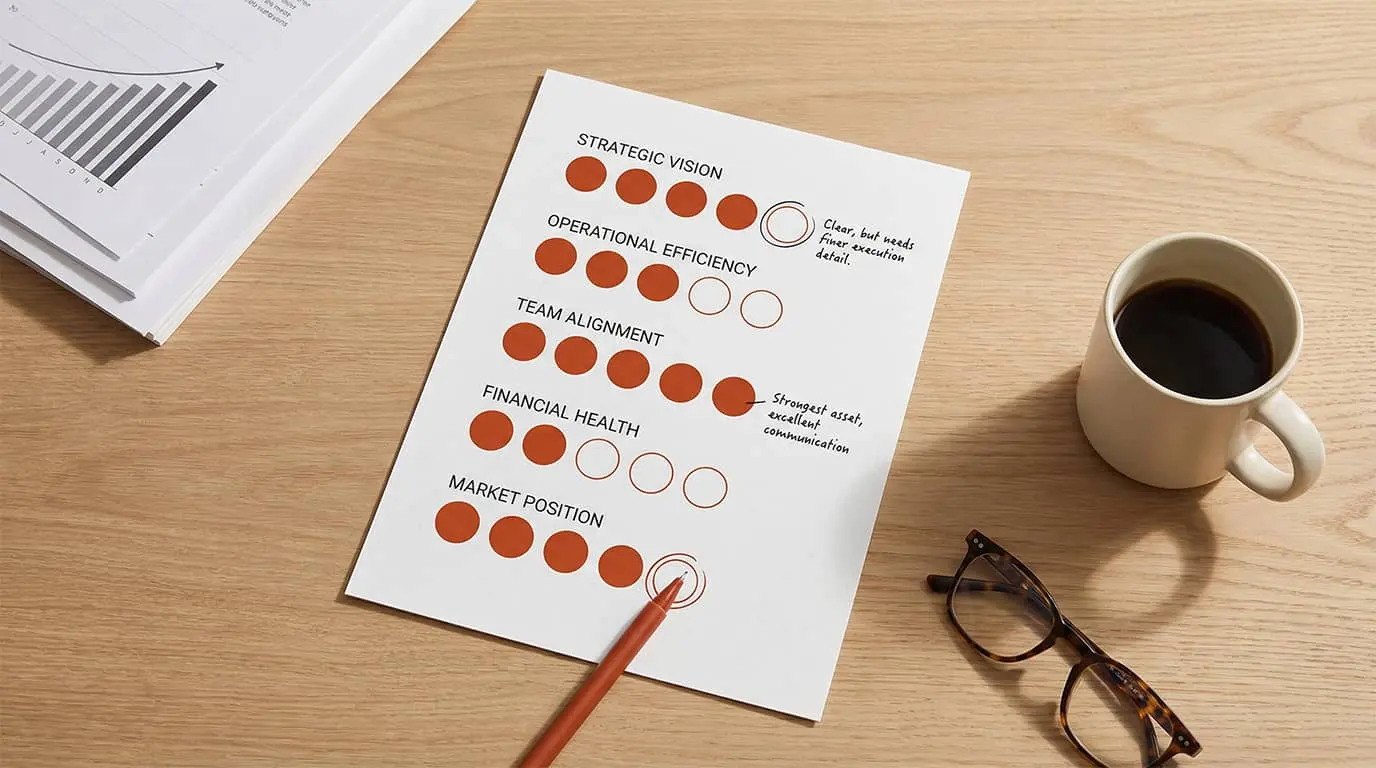
58% of businesses have adopted AI—but many still don't know what they're doing with it. The problem isn't finding tools. It's knowing which problems to solve first. Strategy before tools. Always.
Who this is for
This article is for business owners drowning in AI tool recommendations. Every week brings a new "must-have" solution. Every vendor promises transformation.
If you've tried tools that didn't stick, or you're still asking "where do I even start?" — this is for you.
The problem
You're not short on options. You're short on clarity.
There are thousands of AI tools available today. Your LinkedIn feed is full of them. Your inbox too. Everyone has an opinion on which one will change your business.
The result is predictable: tool fatigue, shiny object syndrome, failed adoptions that wasted time and money.
You don't need another tool. You need to know which problem to solve first.
The tool trap
Let's look at what happens when businesses buy tools before building strategy.
According to RAND Corporation research, over 80% of AI projects fail — double the failure rate of non-AI IT efforts.
That's a strategy problem, not a technology one.
S&P Global data shows the trend is getting worse. 42% of companies scrapped most AI initiatives in 2025. The year before, only 17% did. The average organization abandoned 46% of proof-of-concepts before they reached production.
The most common reasons:
- The tool works in isolation but doesn't fit how teams actually operate
- No one could articulate what specific problem it solved
- People reverted to old habits within weeks
- Maintenance, training, and integration ate up any savings
The graveyard of unused subscriptions grows every month. Don't add to it.
Why strategy comes first
Tools solve problems. But which problems matter most for your business? In what order should you tackle them? What does success actually look like?
Without answers to these questions, you're guessing. And guessing is expensive.
A BCG study found that 74% of companies struggle to achieve and scale value from AI. The 26% who succeed share one trait. They start with strategy, not tools.
AI leaders don't buy more tools. They identify their most costly bottlenecks first. They match solutions to specific, measurable problems. They plan for adoption before implementation. And they measure results and iterate.
Strategy isn't about having a perfect plan. It's about having enough clarity to make smart decisions.
Not sure where your biggest bottlenecks are? Book a free discovery call.
Book a CallWhat an AI strategy actually looks like
Good news: an AI strategy doesn't need to be a 50-page document. For most businesses, it's much simpler.
The three questions
-
What are our biggest time drains? Where does your team spend hours on repetitive, manual work? What tasks create bottlenecks?
-
Which ones can AI actually help with? Not everything benefits from AI. Focus on tasks that are repetitive, data-heavy, or follow clear patterns.
-
In what order should we tackle them? Prioritize by impact and difficulty. Start with quick wins that build confidence.
The components
A practical AI strategy includes:
- A current state assessment: where you are today with tools, processes, and pain points
- 3-5 prioritized use cases ranked by impact and feasibility
- A 90-day roadmap with one pilot, clear metrics, and defined success criteria
- An adoption plan covering who needs training, what changes, and how you'll measure usage
No jargon. No elaborate frameworks. Just clarity on what to do next.
The "one workflow" approach
The fastest path from stuck to moving: pick one workflow.
Not three. Not "a few areas to explore." One specific, high-impact use case.
How to choose
Look for workflows that are:
- Repetitive: same steps, every time
- Time-consuming: hours per week, not minutes
- Measurable: you can track before and after
- Contained: limited dependencies on other systems
Good candidates: customer inquiry responses, content drafting, data entry, report generation, appointment scheduling.
Run a 30-day pilot
Give yourself a month. Implement the solution for one workflow with one team. Track:
- Time spent before vs. after
- Error rates or quality scores
- Team feedback on usability
- Actual adoption (are people using it?)
Expand based on evidence
If it works, you have proof. If it doesn't, you learned something valuable at low cost.
Either way, you're making decisions based on reality, not vendor promises.
Questions to ask before buying any AI tool
Before you sign up for another free trial, ask:
What specific problem does this solve?
Not "productivity" or "efficiency." What exact task, in what workflow, for which people? If you can't answer specifically, you're not ready.
Does it fit how our team actually works?
Watch your team work for a day. Where do they spend their time? What tools do they already use? The best AI solution integrates into existing workflows. It doesn't require inventing new ones.
What's the adoption plan?
Who will use this? How will they learn it? What happens when they hit problems? Tools without adoption plans become shelfware.
What happens if the vendor disappears?
In a market this crowded, vendors come and go. What do you own? Can you export your data? Is there lock-in that would hurt you later?
What's the total cost?
Not just the subscription. Training time. Integration work. Ongoing maintenance. Support costs. The sticker price is rarely the real price.
When you're ready for tools
Once you have strategy, tool selection becomes clearer. Here's how to approach it.
Start with what you already have
Most software you use today has AI features built in. Your email client, your CRM, your project management tool. Check what's already available before buying something new.
Prioritize integration over isolation
Tools that connect to your existing stack beat tools that require separate workflows. Every new login is friction. Every data silo is a problem.
Own what you build
When possible, choose solutions where you control the output. Can you export your automations? Do you own the data? Vendor lock-in is real. Plan for independence.
Build for maintenance
Who will update this when things change? AI tools need ongoing attention. If no one owns maintenance, the tool will decay.
Key takeaways
- Most AI failures come from missing strategy, not bad tools
- 80% of AI projects fail, often because they don't fit how teams actually work
- Strategy means answering: What problems matter most? In what order? How will we measure success?
- Start with one workflow, run a 30-day pilot, expand based on evidence
- The best AI investment you can make is clarity on what to do first
Frequently asked questions
Quick answers to common questions
Ready to build your AI strategy?
The businesses that succeed with AI aren't the ones with the most tools. They're the ones with the most clarity.
Start by identifying your biggest bottlenecks. Pick one. Run a pilot. Measure what happens.
Book a free discovery call to map where you are and find high-impact opportunities. We'll build a 90-day roadmap that fits how your business works.